
 English
Menu




November 26, 2026
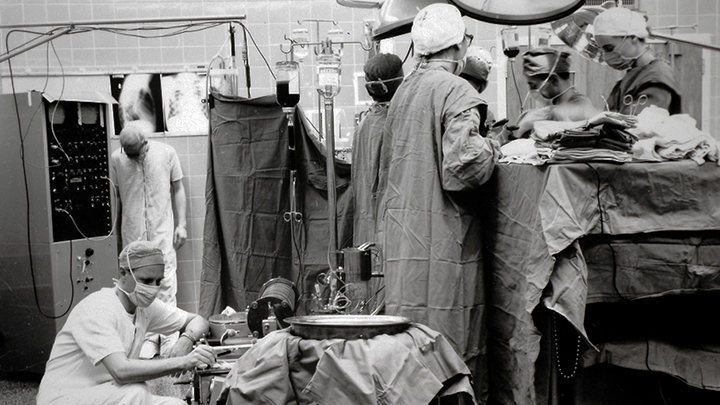
An undated photo from the early days of the University of Alberta Hospital (UAH) heart and lung transplant programs. The teams have saved more than 2,600 lives and are now part of Give Life Alberta. Photo courtesy of Dr. Glen Pearson.
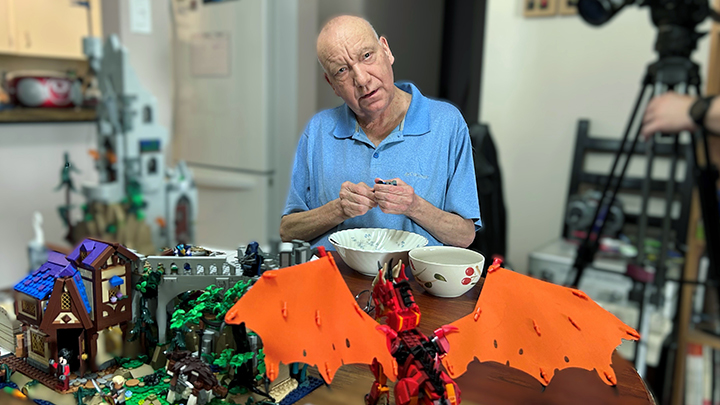
Cary Bloedel is the UAH’s longest-surviving heart-lung transplant recipient. Since his transplant in 1995, he’s had two children and is able to enjoy one of his favourite pastimes: LEGO. Photo by Su-Ling Goh .
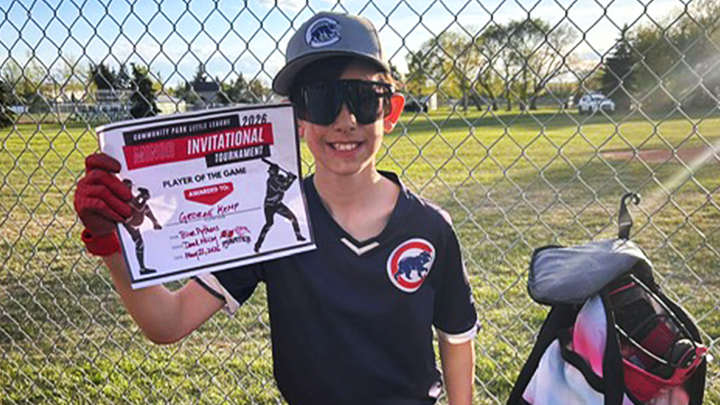
Ten-year-old heart transplant recipient George Kemp is the fastest pitcher on his baseball team. Photo by Lindsey Kemp.
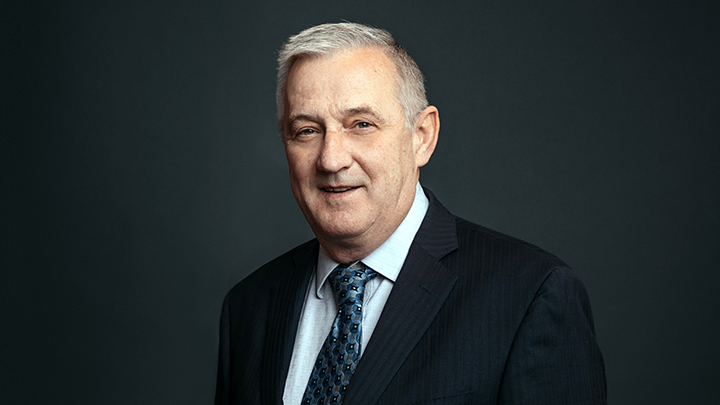
Dr. Dale Lien, UAH Lung Transplant Physician, was one of the program’s first physicians. Photo courtesy of Dr. Dale Lien.
Story & photo by Su-Ling Goh | Photos supplied by Dr. Glen Pearson, Lindsey Kemp & Dr. Dale Lien
EDMONTON – Two of the world’s largest and most successful transplant programs of their kind are celebrating 40 years at the University of Alberta Hospital (UAH), where Western Canada’s first heart, lung and heart-lung transplants were performed during the fields’ pioneering days in the 1980s.
UAH Lung Transplant Physician Dale Lien recalls former surgeon Dennis Modry had trained in both heart and lung transplantation at Stanford University and carried that expertise with him to Edmonton. After a team led by Modry and Dr. Jeff Burton performed UAH’s first heart transplant in 1985, they knew what needed to come next: combined heart-lung transplants.
“There was a significant group of people who had not only need for a heart transplant, but had lung disease, often from congenital heart disease,” recalls Dr. Lien. “Heart transplant alone wasn’t an option for them… they needed to have their lungs replaced as well.”
At the time, Lien had recently joined the UAH team and played a “minor role” in the first heart-lung transplant, led by Modry and Burton, along with Drs. Paul Man, Dat Chin and Craig Guenther.
“It was exciting,” says Lien. “People were kind of feeling their way… (it was) anxiety-provoking for a lot of people.”
Since then, more than 1,200 people have received hearts and 1,400 have received lungs at UAH, including nearly 300 pediatric patients (261 hearts, 30 lungs) and 53 people who received both a heart and lungs. Patients come from across Alberta, B.C., Saskatchewan, Manitoba and the Northwest Territories.
Minister of Hospital and Surgical Health Services Adriana LaGrange says she’s proud to support this life-saving work. “To have not one but two world-class transplant programs celebrating 40 years in Alberta is phenomenal,” says LaGrange. “Congratulations to these outstanding (UAH) teams. We are committed to helping their programs grow even bigger.”
“The (UAH) transplant programs are the epitome of a hub of excellence,” says Dr. Sayeh Zielke, Interim CEO of Acute Care Alberta. “Combining specialized skills, teamwork and innovation has led to the best possible care for some of Western Canada’s most medically fragile patients.”
Cary Bloedel is the program’s longest-surviving heart-lung recipient. Since that surgery in 1995, and later a kidney transplant in 2011, the Edmonton man continues to see his UAH teams for regular follow-ups.
“Shortly after I was born, the doctors found I had a heart condition called Tetralogy of Fallot. At the time, there was really nothing that was able to be done about it,” explains Bloedel. “So I lived with it until I was 22, and that’s when the (heart and lung) transplants happened.”
Bloedel remembers his health deteriorating quickly as a young man. “I started coughing,” says Bloedel. “I couldn’t stop coughing and there’d be bits of blood coming up.”
After receiving the phone call informing him a donor was available, he drove himself to the hospital because his best friend was too nervous to get behind the wheel.
“I also remember the physiotherapy and all the medications and being wired up like a Christmas tree,” laughs Bloedel. “The care was phenomenal.” The now-53-year-old has two treasured children - something his physicians never expected.
“They didn’t know of anybody that had children post-transplant at the time,” says Bloedel.
Looking back at four decades of “world-class” care, Give Life Alberta Interim Managing Director Deanna Paulson says nothing brings her more joy than seeing patients live long, full lives.
“The outcomes and the length of time our patients survive has changed significantly,” says Paulson, who joined UAH as a manager of two units in 1998. “We never saw the long duration post-transplant back in the day that we do today. It’s really phenomenal.”
Both Paulson and Lien attribute the programs’ success to the dedication, compassion and experience of UAH teams: physicians, nurses, donor and transplant coordinators, operating room and inpatient staff, physiotherapists, occupational therapists, pharmacists, laboratory professionals, dietitians and social workers. Close collaboration across various transplant specialties has also been vital.
“I think with time, we developed a better understanding of the surgery associated with transplant, perioperative care, intensive care,” says Lien. “We started to get more success and started taking on more patients.”
They also credit medical advances - such as Dr. Lori West’s world-renowned scientific breakthrough in the 1990s, which expanded the donor pool for babies by proving it was safe for infants to receive hearts from donors with incompatible blood types. West and Dr. Ivan Rebeyka led the world’s first incompatible pediatric heart transplant before both were recruited to UAH.
UAH, including the Stollery Children’s Hospital and the Mazankowski Alberta Heart Institute, has also built one of the largest Ventricular Assist Device (VAD) programs in North America. VAD technology can act as a life-sustaining bridge while patients wait for a new heart.
And Drs. Jayan Nagendran and Darren Freed’s research on cutting-edge technologies and techniques continues to improve outcomes by preserving - or even improving - the health of donor hearts and lungs before transplant.
“We’ve been able to gather people and recruit doctors from all over Canada and the world and from all different specialties that work together to actually make our patient outcomes the best,” adds Paulson.
George Kemp is proof of UAH expertise. One would never guess the athletic 10-year-old has had two heart transplants.
“I like pitching… everyone just wants me to pitch because I'm the hardest pitcher on my (baseball) team,” says George, whose pitch speed is up to 70 kilometres per hour.
As an infant, George was diagnosed with a heart muscle disease called dilated cardiomyopathy. Four months later, he received his first heart transplant.
“You just think, ‘Everything's going to be okay after that (transplant)’… and we were thankful and happy,” recalls George’s mother, Lindsey Kemp. “But then a year later, he went into rejection. And so we had to go through it again.”
The second donor heart arrived after a “scary” seven months on the wait list; George became gravely ill.
“For a three-year-old to understand (transplantation), (the Stollery team) said they were ‘building’ his heart and it was just taking time,” smiles Lindsey. “And so I remember when they told George they finally built his heart… he was excited.”
As a way to give back, the Kemps co-created the nonprofit organization Big Gifts for Little Lives, raising funds for pediatric heart transplant research. Lindsey tears up when she thinks about the difference her son’s medical team – and his two donors – have made.
“There's not even words to (explain the) gratitude… that's not even a big enough word for it,” says Lindsey.
More than 500 people are waiting for life-saving transplants in Alberta. To register your donation decision, visit GiveLifeAlberta.ca.
For health advice 24/7 phone 811 a free health information service. You have options to speak with a variety of health professionals.
Alberta Health Services values your input. Your feedback will help us continuously improve the quality of Alberta's healthcare system.
Online payment is available for hospital stays, food handling permits, ambulance services, courses, parking citations, and parking permits.