
 English
Menu
English
Menu




January 22, 2026
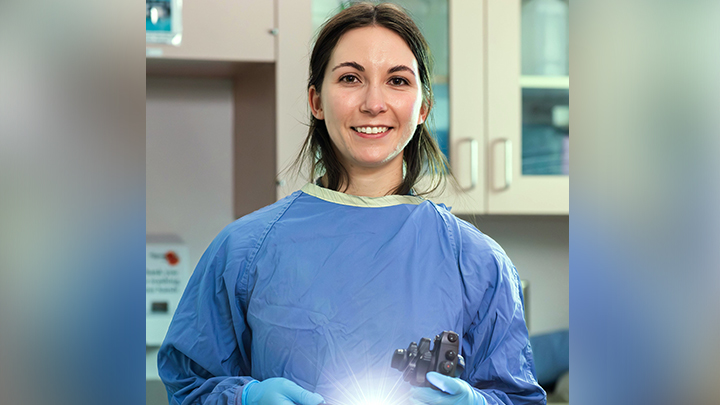
Dr. Lindey Felske is currently completing her Enhanced Surgical Skills residency at the Sturgeon Community Hospital in St. Albert. Photo by Evan Isbister.
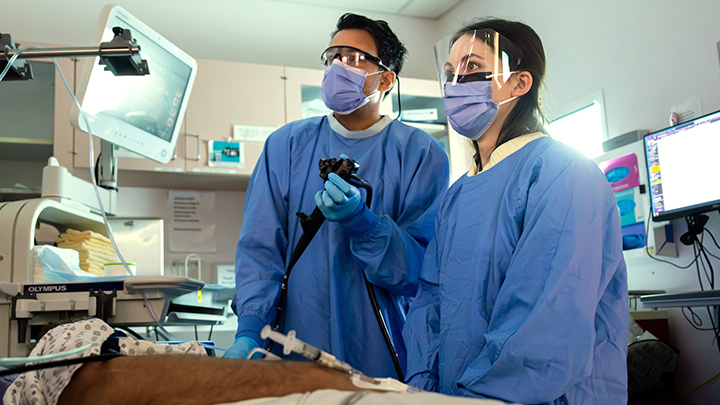
Dr. Mandeep Sandhu shows Dr. Lindey Felske a different way to hold and advance the endoscope during a gastroscopy procedure at the Sturgeon Community Hospital. Photo by Evan Isbister.
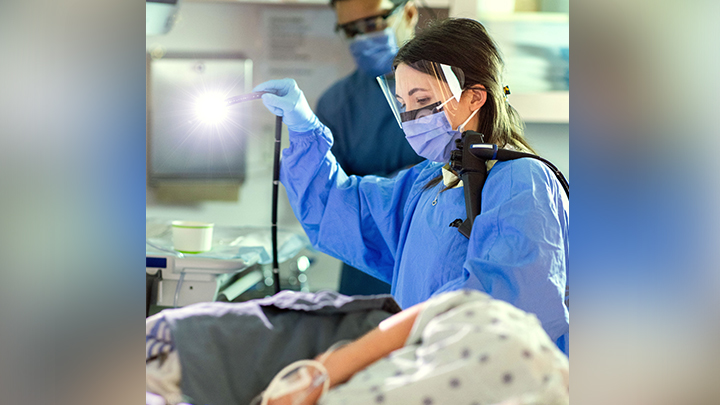
Dr. Felske preps the endoscopic camera before she begins a colonoscopy procedure under the guidance of Dr. Mandeep Sandhu. Photo by Evan Isbister.
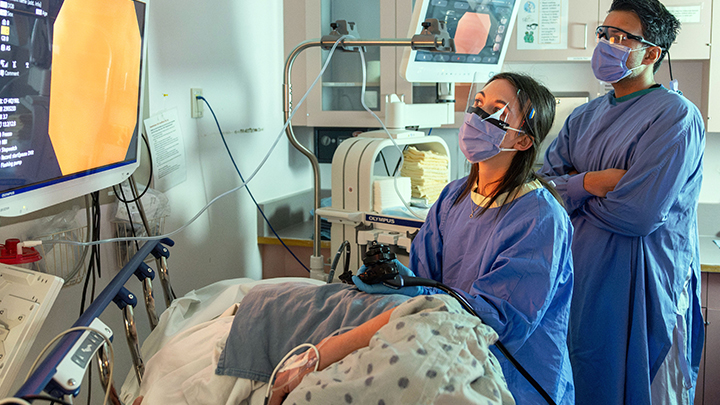
With the guidance of gastroenterologist Dr. Mandeep Sandhu, Dr. Lindey Felske performs a colonoscopy procedure at the Sturgeon Community Hospital. Photo by Evan Isbister.
Story by Katie McLaughlin | Photos by Evan Isbister
Dr. Lindey Felske has her heart set on doing what she loves, becoming a rural family physician with surgical and obstetrical skills to offer residents in Southern Alberta. Thanks to a new residency program through the University of Alberta, she’s one step closer to making her dream a reality.
“Rural family physicians are a jack-of-all-trades in many ways because we’re involved in so many aspects of care throughout a patient’s life,” says Dr. Felske. “Rural patients are so appreciative of you being there for them. It’s tough, but very rewarding.”
Dr. Felske, who finished her medical training at the University of Calgary in 2023, is drawn to both general practice and more hands-on procedures, including surgery and obstetrics. It was while she was in Lethbridge that she realized she could combine all these things while being a rural physician.
“I was very drawn to procedures during medical school and really enjoyed being in the operating room, but I also enjoyed generalist medicine and obstetrics,” she says. “When I matched with rural family medicine in Lethbridge, I met some family medicine physicians who also did surgery in the periphery. I didn’t know family physicians could get extra training to provide surgical services to rural patients, but I thought it was a great mix of what I love to do.”
Luckily for Dr. Felske, the University of Alberta launched a new 12-month Enhanced Surgical Skills (ESS) residency program and they were looking for their first resident. The program, delivered in partnership with Acute Care Alberta’s Rural Surgical and Obstetrical Networks of Alberta (RSONA), provides general medicine practitioners with the opportunity to learn surgical skills that help rural patients have access to more support in their home communities.
“Our ESS residents focus on three primary areas that reflect the needs of rural communities — general surgery, surgical obstetrics and endoscopy,” says Dr. Mark Prins, program director for the Enhanced Surgical Skills program and director of Rural and Regional Health for the University of Alberta’s Department of Medicine and Dentistry. “This gives family physicians the skills they need so they can offer these procedures in rural communities.”
Dr. Felske felt immediately drawn to the program. In July, she took one step further towards her dream and started her residency.
“My first rotation was at the University of Alberta Hospital, where I learned some basic trauma skills like chest tube insertions,” she says. “Now I’m at the Sturgeon Community Hospital, and I’ve completed initial rotations in general surgery, obstetrics and gastroenterology.”
It's there that she met Dr. Mandeep Sandhu, gastroenterologist and facility chief for gastroenterology and endoscopy at the Sturgeon Community Hospital, and one of the physicians training Dr. Felske during her residency. Under the guidance of gastroenterologists like Dr. Sandhu, Dr. Felske is learning how to perform diagnostic gastroscopies and colonoscopies, take biopsies and remove simple polyps.
“Gastrointestinal diseases such as inflammatory bowel disease and colorectal cancer are on the rise in both rural and urban areas and often require endoscopy to diagnose and manage this,” says Dr. Sandhu.
“Endoscopic procedures are being done in some parts of rural Alberta, and our goal is that the future doctors who go to work in these areas can continue to provide these services in a safe and high-quality fashion.”
Currently, many patients travel from smaller communities for diagnostic studies that could be done closer to home. Enabling more rural family doctors to provide these diagnostic procedures means better access closer to home, while also reducing referral volumes for urban centres.
“As these rural communities grow, it’s important that access improves, along with an expanded skillset of the physicians in those areas to do less complex endoscopic procedures,” he adds.
Under the guidance of other specialist physicians, Dr. Felske is learning how to safely do some gynecological and obstetrical procedures, including caesarean sections, and some obstetrical emergencies like post-partum hemorrhage, operative vaginal deliveries and perineal repairs. She’s also learning laparoscopic appendectomies and simple umbilical hernia repairs, and how to remove larger and more complex lumps and bumps that require more than a clinic procedure.
Now that Dr. Felske has completed her mandatory rotations in all three areas of focus, she has the opportunity to map out the rest of her learning until her residency ends in June 2026.
“The idea is that I can look ahead at the schedule and pick where I think I’ll get the most out of my learning for the day,” she says. “I can jump into the operating room, spend time in the labour and delivery ward or bounce around in between the three specialty areas.”
She’s hoping to get more experience in obstetrics, which she says is an area close to her heart.
“Obstetrics was one of the first things in medical school that I truly loved,” she said. “Being able to provide more obstetrical care than I was able to do in my initial residency is amazing. But any time I can spend in the operating room is my happy place.”
Dr. Felske believes there are many ways her ESS skills will help her patients once she settles into a family medicine practice, including allowing more low risk patients to deliver their babies closer to home, decreasing travel for simple procedures and potentially decreasing the wait time for procedures that could be done closer to home, like colonoscopies.
Ultimately, she feels that this path will provide good balance for her career, allowing her to combine clinic days with a variety of hands-on procedures and providing quality care to rural Albertans.
For health advice 24/7 phone 811 a free health information service. You have options to speak with a variety of health professionals.
Alberta Health Services values your input. Your feedback will help us continuously improve the quality of Alberta's healthcare system.
Online payment is available for hospital stays, food handling permits, ambulance services, courses, parking citations, and parking permits.