
 English
Menu
English
Menu




April 16, 2026
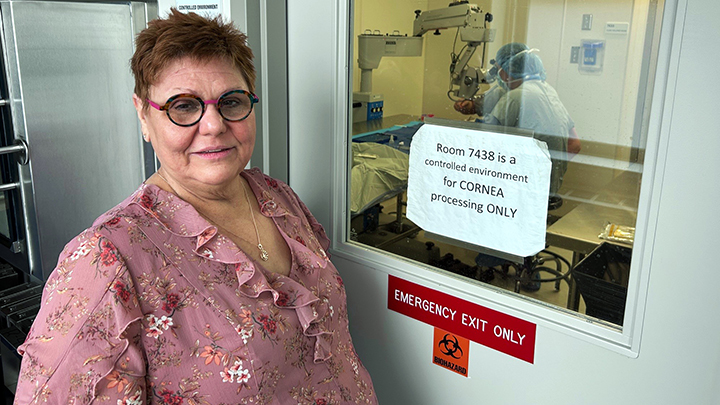
Five-time cornea recipient Karyn Wog looks on at Give Life Alberta Tissue Bank North, where donated eyes are stored and processed for transplant and other life-changing surgeries. Photo by Su-Ling Goh.
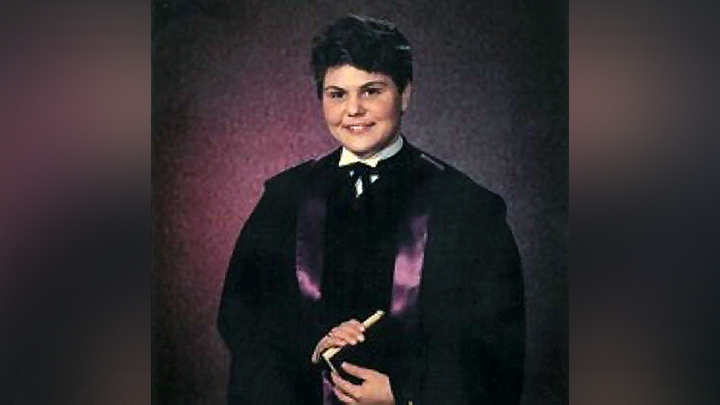
Karyn Wog was in her twenties when she started to lose her vision due to an inherited form of rheumatoid arthritis which caused her corneas to deteriorate. She’s seen here at her grad in 1988. Photo courtesy of Karyn Wog.
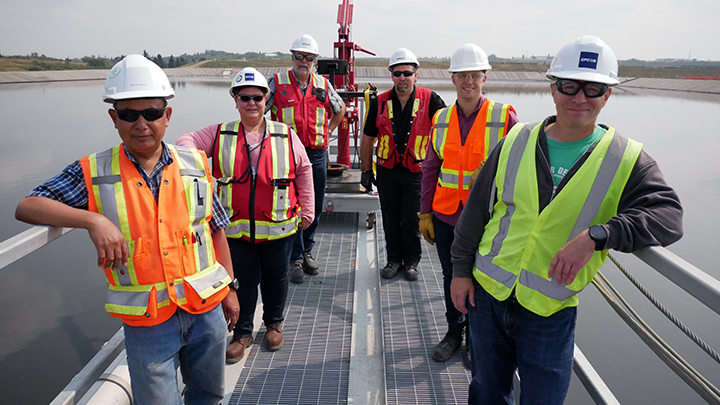
After years of blindness and having to step back from her beloved career as a construction engineer several times, Karyn Wog, second from left, is back to work as a project manager for water and wastewater infrastructure in Edmonton. Photo courtesy of Karyn Wog.
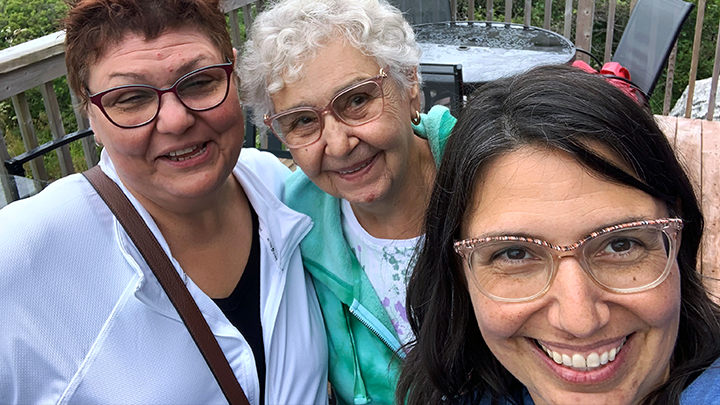
Karyn Wog, left, was recently able to travel to Peggy’s Cove in Nova Scotia with her mother and sister — the first time she’d seen them in years. Photo courtesy of Karyn Wog.
Story by Su-Ling Goh | Photos by Su-Ling Goh and Karyn Wog
EDMONTON — Karyn Wog keeps a few dimes on her at all times. The coins are more than pocket change — they’re a reminder of how fortunate she feels to be able to see.
“The size of the dime is about the size of my donated cornea. So when I have (dimes) in my pocket and I feel them, I can say a little thank-you or a little prayer,” says Wog.
“It’s just a little physical reminder that my gift is only that big, but it’s made a world of difference.”
The cornea is the windshield of the eye; the clear protective dome that plays a key role in vision. In Wog’s case, an inherited form of rheumatoid arthritis caused her corneas to deteriorate.
“In the early ‘90s, my vision kept getting worse, I kept changing glasses. I was finally sent to an ophthalmologist who said, ‘Oh … you’re going to go blind’,” recalls Wog.
Wog was an engineering student at the University of Saskatchewan at the time. She was eventually told she’d need a cornea transplant — but she’d have to wait for a suitable donor. That wait turned out to be five years. In 1998, when her vision had declined to the point where it was “like looking through a snowstorm”, she received the transplant.
“You go into surgery, you can’t see.… And then you wake up with a patch over your eyes, and when the doctor takes that off — it was amazing,” Wog says with a smile.
“It had been years since I could see a clock on a wall, let alone read it, and I kept saying, ‘The time is 7:30! Is it really 7:30?’ It was so amazing that yesterday I couldn’t see this and today I can.”
Candice Bohonis, senior tissue specialist with Give Life Alberta Tissue Bank North, says one eye donor can help up to 12 people.
“You’re restoring sight, you’re helping people who need the structural integrity of their eye restored due to disease, damage or trauma,” says Bohonis.
While the wait time for a cornea transplant in Alberta has improved in recent years — it’s now around one year — there are never enough eye donors. To keep up with demand, Alberta regularly needs to import corneas from the United States.
While only one to two per cent of people are eligible to donate organs after they pass away, almost everyone under the age of 81 can be considered for eye donation. Eye donors often come from palliative care units or hospices; many died of cancer.
“The cornea is not perfused with blood, so that’s why a lot of diseases that would preclude other tissue donations — like skin or bones or tendons — don’t apply to corneas,” explains Bohonis.
During her wait for her first transplant, Wog managed to complete her Master of Engineering degree, but she’s had to leave her hard-earned career several times because her body eventually rejected, or her disease attacked, her new corneas. Since 1995, she’s been legally blind in both eyes six times — for up to two years at a time — and has had a total of five cornea transplants.
“Even simple things (were difficult), like working in the kitchen, putting a coffee cup on the counter without spilling, not tripping on things … going to the mall and not getting lost because you can’t see.”
Wog is now back to work as a project manager for water and wastewater infrastructure in Edmonton. She recently travelled to Peggy’s Cove in Nova Scotia with her mother and sister — the first time she’d seen them in years.
Wog’s great-grandmother and two aunts had the same genetic condition, but they didn’t have the opportunity to receive a transplant and went permanently blind. Wog recycled some of their jewelry to create a special necklace which she wears close to her heart.
“(The pendant is) a star with rays of sunshine — and there’s five branches and five little stones that represent my five donors.”
April is National Organ and Tissue Donation Awareness Month. More than 500 people are waiting for life-saving transplants in Alberta. To register your donation decision, visit GiveLifeAlberta.ca.
For health advice 24/7 phone 811 a free health information service. You have options to speak with a variety of health professionals.
Alberta Health Services values your input. Your feedback will help us continuously improve the quality of Alberta's healthcare system.
Online payment is available for hospital stays, food handling permits, ambulance services, courses, parking citations, and parking permits.