
 English
Menu
English
Menu




June 25, 2026
Story by Kelly Morris | Photos by Leah Hennel
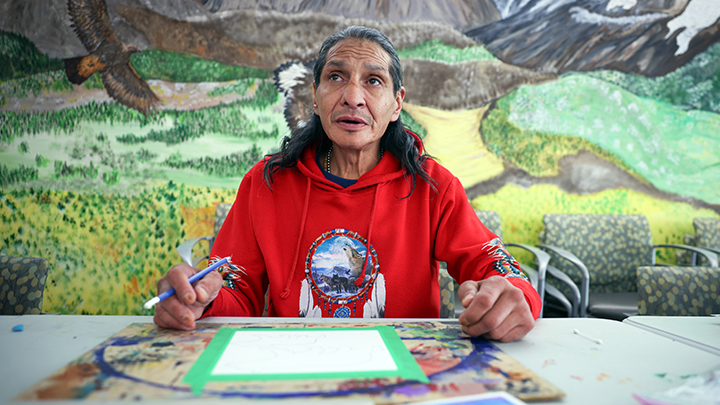
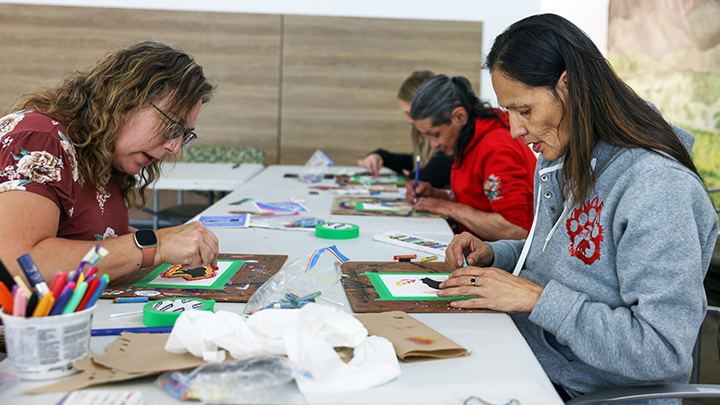
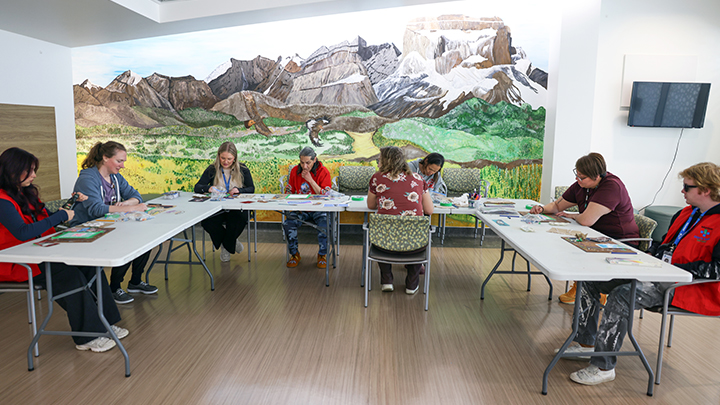
LETHBRIDGE — SOAR, the Spirit of Art and Reconciliation, continues to reduce stigma and inspire creativity weekly at Chinook Regional Hospital (CRH).
The program, developed by Indigenous Health in partnership with Allied Health Therapeutic Recreation, brings together Indigenous and non-Indigenous patients in the hospital’s Ceremony Room every Wednesday to support social, emotional and cultural connection and healing.
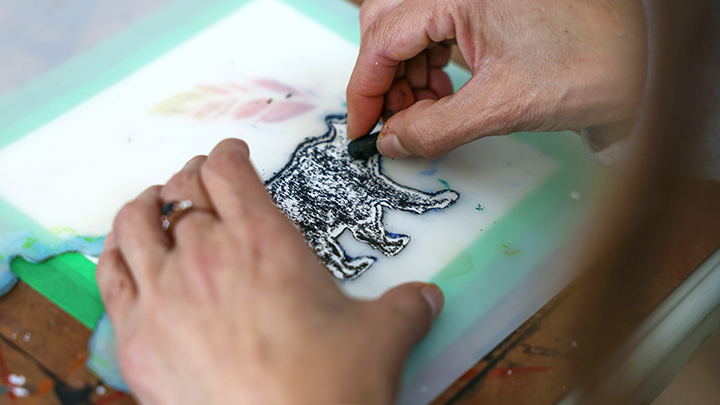
Participant Vincent White Quills is new to creating art, but with a little guidance and encouragement, his creation quickly began to tell his story. Using pastels, water and stencils, a bear and feather came to life on the page.
“Kiááyo’s bear — he has strength,” shares White Quills. “And the feather reminds me of an eagle that’s got very powerful claws. He swirls in the wind as high as he can go.”
The symbols of strength, power and freedom resonate with Vincent as he begins his recovery journey at the Lethbridge Recovery Centre, located within CRH.
Supporting the program over the last year, therapy assistant Trishell Provost sees the benefits that SOAR brings to patients. Provost is Blackfoot, from the Piikani Nation, west of Lethbridge.
“Being Indigenous, I think helps ease participants into feeling comfortable and safe to leave their room,” says Provost. “It’s such a foreign environment, especially being away from home and family, so if there’s someone that’s familiar, it can ease that tension.”
“There’s been such a stigma to being in a hospital, that institutionalized place, so being able to have an area like this, a space to feel safe and tap into their creative side I think really benefits them and helps them in that healing process,” Provost adds.
“I’ve been with the program for about a year or so, and I feel each time I come I always gain a different perspective on what this program means to the patients. It’s very welcoming and the community that we create in the time we’re here is just amazing.”
For health advice 24/7 phone 811 a free health information service. You have options to speak with a variety of health professionals.
Alberta Health Services values your input. Your feedback will help us continuously improve the quality of Alberta's healthcare system.
Online payment is available for hospital stays, food handling permits, ambulance services, courses, parking citations, and parking permits.