
 English
Menu
English
Menu




September 17, 2026
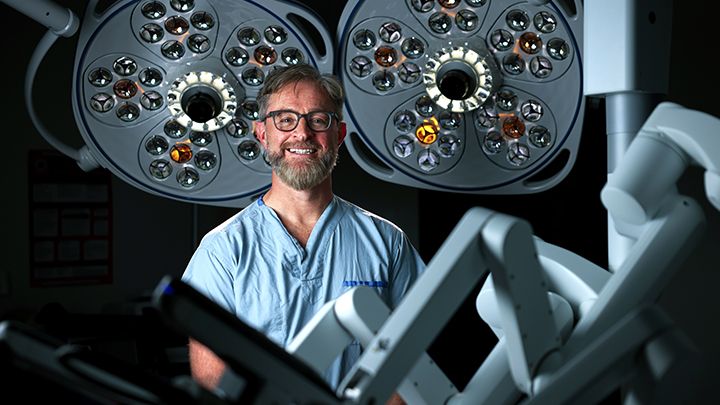
Dr. Stephanus Van Zyl, a urologist at Red Deer Regional Hospital Centre, is one of four surgeons at the site who are now performing robotic surgeries which offer better outcomes for patients in central Alberta. Photo by Leah Hennel.
Story by Kristen Anderson | Photo by Leah Hennel
RED DEER — It took persistence, partnership and community support to bring robotic-assisted surgery to Red Deer.
It’s been only four months since the da Vinci surgical system began operating at Red Deer Regional Hospital Centre (RDRHC), and it’s clear this vision is already helping patients access specialized care closer to home.
“This has been a 10-year journey in the making,” says Dr. Stephanus Van Zyl, a urologist at RDRHC. “After my fellowship training in Calgary, I came to Red Deer and started trying to motivate local management, the foundation, and the staff to get on board. And here she is.”
The da Vinci Xi Surgical System is a robotic-assisted surgical platform that gives surgeons greater visualization, precision and control during minimally invasive procedures.
Surgeons control the system from a console, guiding small instruments and a high-definition 3D camera inside the patient. The technology is designed to complement, not replace, the expertise and decision-making of the surgical team. A second surgeon remains at the bedside, providing another layer of expertise and support.
For patients, the da Vinci surgical system means faster recovery time, less surgery time, reduced post-operative pain — and lets them get back to their normal lives sooner. Most patients undergoing robotic-assisted procedures are ready to go home the following day, allowing them to begin their recovery closer to family and their community.
Since May, the surgical team has completed 81 robotic-assisted procedures, primarily prostate and kidney surgeries. RDRHC is also the first site in Alberta to complete a cystectomy — removal of the urinary bladder because of cancer — using the da Vinci system.
For Dr. Van Zyl, bringing robotic surgery to Red Deer means more than what the technology can do for patients today. It’s also about building a surgical program that will attract the next generation of physicians.
“A lot of these new technologies are available in the training facilities, so pretty much any resident will have training on robotic surgery technology,” he says. “Because we now have this available, we can recruit more and there’s more interest. (For) most of the new surgeons completing their residency, this is how things get done.”
The investment in robotic surgery is strengthening Red Deer’s ability to attract and retain highly-skilled surgical teams — an important consideration as the hospital looks toward future expansion and the growing healthcare needs of central Alberta.
“Our team, the nurses, surgeons, management, everyone has been really good with getting this rolled out,” says Dr. Van Zyl. “I think we’re doing a great job in Red Deer.”
The da Vinci system was made possible through a $3.5-million donation from the Red Deer Regional Health Foundation, a reflection of the community’s long-standing commitment to its hospital.
“The robot allows us to demonstrate to the community how incredible their support is and the changes that it makes here in the Red Deer hospital,” says Manon Therriault, CEO of the Red Deer Regional Health Foundation. This connection between the community and its hospital is what makes the investment so meaningful, she adds.
“It’s an incredibly generous community. It’s an ownership-based community and that’s what I love about the work that we do here,” says Therriault.
“People understand that the investment that we put into our healthcare system brings it to the level of care that they believe they deserve.”
The arrival of robotic-assisted surgery at RDRHC reflects the continued growth of innovative surgical care across Alberta.
For Therriault, the most meaningful measure of success comes from the patients themselves.
“There’s no bigger thank-you than being able to relay the messages the patients give to us after having benefitted from the surgeries and procedures that our donors have funded,” she says. “It’s a direct thank-you, not from me, but from the patients themselves.
“This hospital needs more. We deserve more. Our community backing us on that? That’s a beautiful thing for us to be a part of — and I’m just so grateful for everybody who jumped in and made this happen.”
For health advice 24/7 phone 811 a free health information service. You have options to speak with a variety of health professionals.
Alberta Health Services values your input. Your feedback will help us continuously improve the quality of Alberta's healthcare system.
Online payment is available for hospital stays, food handling permits, ambulance services, courses, parking citations, and parking permits.