
 English
Menu
English
Menu




March 25, 2013
Living with a chronic condition like diabetes isn’t easy, but it doesn’t have to be a struggle each day, either. With proper management and support, people with diabetes can control their condition, rather than letting it control them.
Empowering clients and giving them the support they need is the intention of diabetes educators like Kathleen Smith. One of 10 educators – including six registered nurses and four registered dietitians – in the Diabetes Specialty Care Program, Smith works at the Diabetes Education Centre in Red Deer to help clients manage their condition through what they put on their plate.
“We talk about nutrition in a broad sense to begin with, the really practical basics about eating healthy and then focus on specifics for each client so that we can tailor an approach to nutrition that will support them in leading the best life they can,” says Smith, a certified diabetes educator and registered dietitian. “Diet is so important for people with diabetes; it can make a really big difference in how people manage if they are eating healthy.”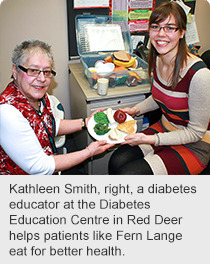
The Diabetes Specialty Care Program serves a variety of clients – including adults, pregnant women, seniors and children alike – all within the Diabetes Education Centre. They have access to the educators, who work closely with physicians, pediatricians and nephrologists. Individual care appointments, as well as a variety of group sessions are offered.
Smith explains that dietitians don’t work to change all of a person’s eating habits or prescribe a “diet” – rather they strive to educate diabetics on the choices they can make when it comes to stocking their fridge, and develop solutions to the challenges they may face.
“Food is so much a part of what we do as a society, and there are so many factors that can influence what is eaten or purchased,” says Smith. “We take into account the choices a person has available to them when shopping for groceries, which can be impacted by where they live, their mobility, other medical conditions or medications they may be taking, or their finances.
“Using the Canada Food Guide, we look at what foods a person values, or what foods they like for ways we can work them in, and where we can make little changes or additions.”
When working with a child or youth, families are involved in the sessions, so everyone is on the same page. Dietitians look at healthy meal planning and preparation and, once the cornerstones are in place, work with patients, encouraging them to buy into the changes.
For clients like Fern Lange, buying into the dietary changes has made a difference in her day-to-day living.
“I feel so good,” she says. When Lange first came to the centre, her blood sugar levels were all over the map and she was struggling to manage her diabetes. Her insulin intake was high, as well.
“I learned so much from working with Kathleen. By making some changes to what I was eating, we were able to get my numbers back on track where they should be,” says Lange. “She told me things I could do to make a difference for myself and worked with me when it came to my eating. It was a partnership we had that helped me get feeling better.”
Lange learned how to manage her condition by eating smaller, more frequent meals throughout the day to maintain an even blood sugar.
And while healthy eating and proper management can’t cure or correct diabetes, they can make a positive difference.
“Success is possible, and it’s amazing to hear stories like Fern’s,” says Smith. “It’s always so rewarding and so wonderful to see people make changes and have those changes be successful.”
The Diabetes Specialty Care program is available in Red Deer, Drayton Valley, Wetaskiwin and Vegreville. For more information on the various sessions and appointments available, call 1-877-314-6997 or visit http://www.albertahealthservices.ca/ev/ne-ev-cdm-calendar-2013.pdf
For health advice 24/7 phone 811 a free health information service. You have options to speak with a variety of health professionals.
Alberta Health Services values your input. Your feedback will help us continuously improve the quality of Alberta's healthcare system.
Online payment is available for hospital stays, food handling permits, ambulance services, courses, parking citations, and parking permits.